What Is Protein Overload in Hair?
Protein plays a necessary and important part in keeping your hair healthy and strong. That’s why you’ll find it in so many hair care products. Proteins help give your hair structure and lock in the moisture in your hair by creating a protective barrier between it and the outside air.
However, protein can be too much of a good thing. If you’re experiencing breakage and your hair feels brittle and rigid, you might have protein overload hair. Protein is a common ingredient in shampoos and an important part of keeping your hair healthy. After all, your hair is made out of mostly protein. But overusing it can cause your hair to look dry and damaged.
What Are Protein Overload Hair Symptoms?
Protein overload hair symptoms are more than just dryness. If you notice that your hair is frizzier than usual, with lots of flyaway hairs, that it has lost its shine, and that it doesn’t bounce back when pulled down, you might have protein overload.
What Does Protein Overload Hair Look Like?
So, what does protein overload hair look like? There are telltale signs that indicate protein overload hair. It will have all the symptoms of dry hair, like frizziness and lack of shine. In addition, curls will be less bouncy, with stringy ends that look like straw. Excess breakage will cause lots of flyaway hairs. You’ll also find that your hair tangles easily.
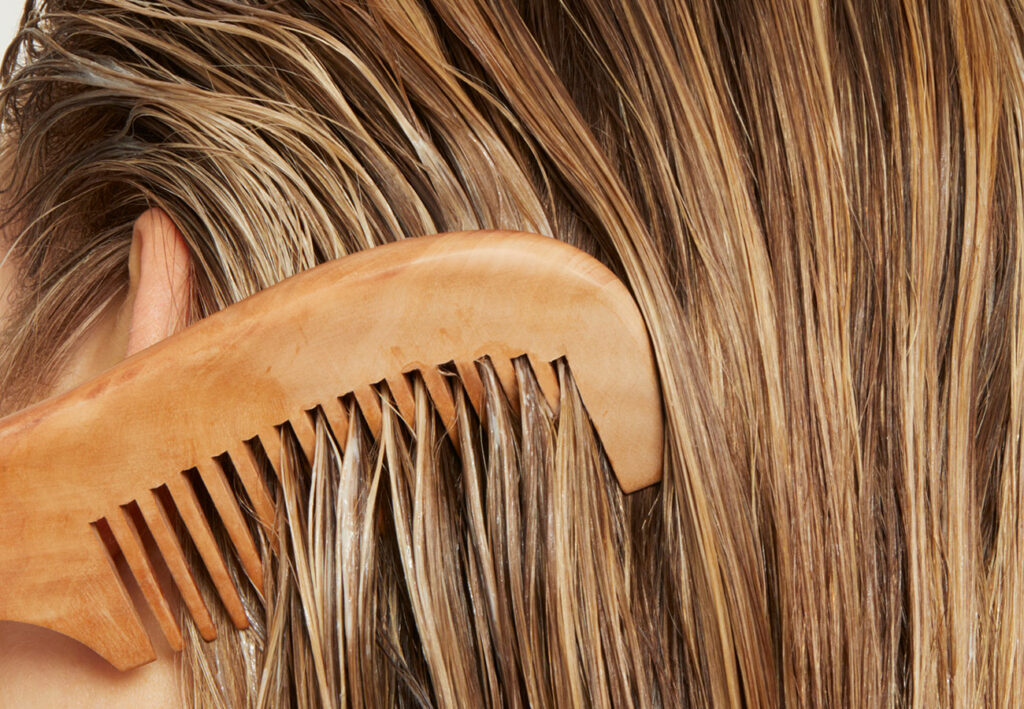
Hair with protein overload has a distinctive straggly look. This is due to hair ends looking and feeling like straw and losing their shape.
Protein Overload Hair Test: How to Tell If You Have It?
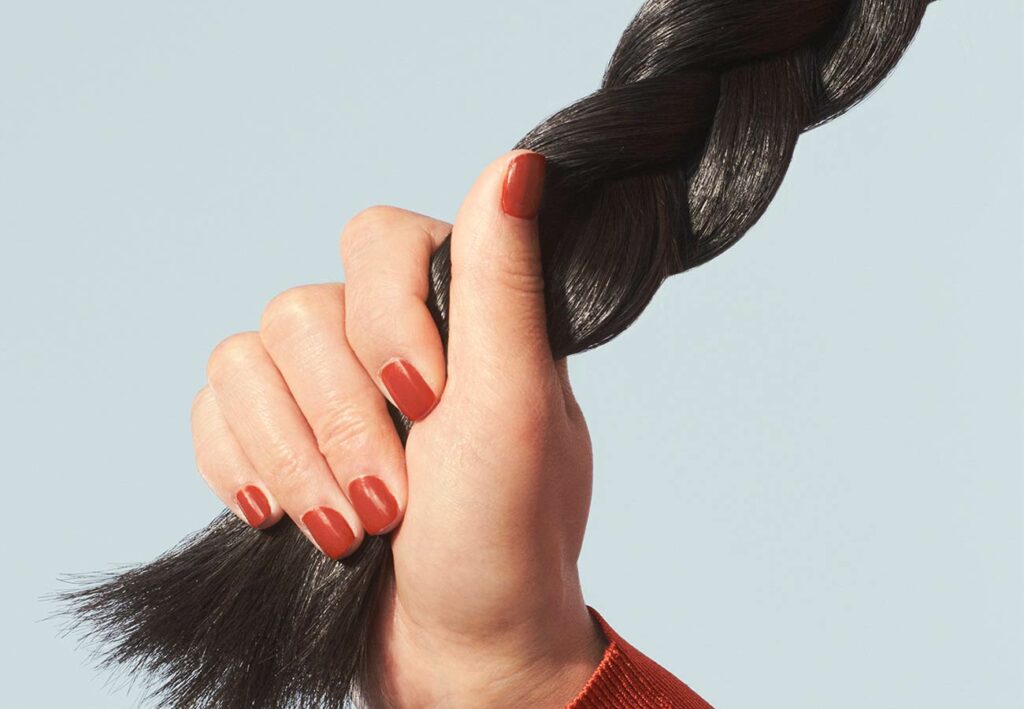
The protein overload hair test is a great way to determine if you have it. After you wash and towel dry your hair, hold the end of a strand of damp hair between your fingers. Stretch it as far as it will go, then let go, and observe how it behaves. Well-balanced hair will stretch a little and bounce back to its original position. Protein overload hair will snap quickly with very little stretch, while moisture-overload hair will over-stretch and fail to recoil.
What’s the Difference Between Protein Overload vs Moisture Overload?
While they may have similar symptoms, it’s important to distinguish between protein overload vs. moisture overload hair because the treatments are completely different.
While protein overload hair is dry and brittle, moisture overload hair feels mushy and almost cottony due to its excessive moisture content. It struggles to hold its shape and also breaks easily. Moisture overload hair looks fluffy, while protein overload hair looks straggly.
How to Fix Protein Overload in Hair?
Now that you’ve determined what’s going on, you can learn how to fix protein overload in hair.
- Identify which products are causing protein overload. Read the labels and look for ingredients like hydrolyzed collagen, keratin, casein, and protein. Quinoa and soy are also proteins worth watching out for, and can be easy to miss if you’re looking for the more obvious ingredients. You might want to stop using those products until your hair balance has been restored, and then make sure to only use one protein-containing product at a time.
- Start a clarifying routine. Protein overload hair is a result of buildup, so you need to get rid of the excess protein. Soak your hair thoroughly before applying a clarifying shampoo with low protein-content. Condition with moisture-rich butters or other products.
- Maintain balance. If your hair suffers from protein overload, it might simply be prone to it. Find a line of products with low protein content (your hair will always need at least a little bit of protein). If your hair starts feeling brittle and straw-like again, reassess your routine.
Protein Overload in Curly Hair: Why It Happens More Often
If you’ve got curly hair, you’re more likely to have protein overload, not because of the curl pattern itself, but because curly hair can be more prone to elevated porosity. Since porosity is primarily driven by cuticle damage and chemical history, in curly hair, the cuticle lifts at each bend and twist of the hair strand, making it more susceptible to increased porosity and damage.
Think of different types of hair as different kinds of sponge. Low porosity hair is like a really dense sponge with lots of tiny holes. It doesn’t take in a lot of water but retains it well. High porosity hair is more like a sponge with large holes. It can take in way more water, but is not as effective at retaining it.
Since curly hair tends to be high-porosity, keeping it adequately moisturized is a constant struggle. While different types of curls require different routines, it’s always a good idea to focus on moisturizing rather than adding structure.
Take Prose’s hair consultation to discover which custom formulas are right for your unique hair needs and goals.
FAQs:
What is protein overload in hair?
Protein overload in hair is an excess of protein buildup that causes dry, brittle, dull hair. It can also be the source of breakage and hair damage.
What are the symptoms of protein overload hair?
Symptoms include dry and brittle-feeling hair, straw-like ends, lack of shine, lack of bounce, and frequent breakage.
How do I fix protein overload in my hair?
To fix protein overload hair, first remove the protein buildup by using a clarifying shampoo. Check your hair products for protein content and avoid overloading your hair again. Choose a haircare line that emphasizes moisture rather than structure.
What does protein overload hair look like?
Protein overload hair looks dry with lots of flyaway hairs. The ends of the hair look like straw, with no elasticity.
How can I tell if I have protein overload vs moisture overload?
While breakage is a symptom of both protein overload and moisture overload hair, there are ways of telling them apart. Moisture overload hair feels mushy and cottony and tends to look fluffy, while protein overload hair looks frizzy.
Is protein overload more common in curly hair?Yes. Because it tends to lose more moisture, it’s easy to cause protein overload in curly hair. However, treatments are available to restore shine, bounce, and definition.
Refereces
-
-
https://curlsmith.com/blogs/curl-academy/protein-overload
-
https://www.curlsbot.com/blog/mystery-of-protein-overload-a-scientific-investigation
-
https://www.cosmopolitan.com/style-beauty/beauty/a28408775/hair-porosity-curls/
-
https://discovertreluxe.com/blogs/education/how-to-determine-if-your-curly-hair-needs-moisture-or-protein
-
https://us.davines.com/blogs/news/protein-overload-or-moisture-overload
-
https://www.mykitsch.com/pages/hair-protein-sensitivity-chart